


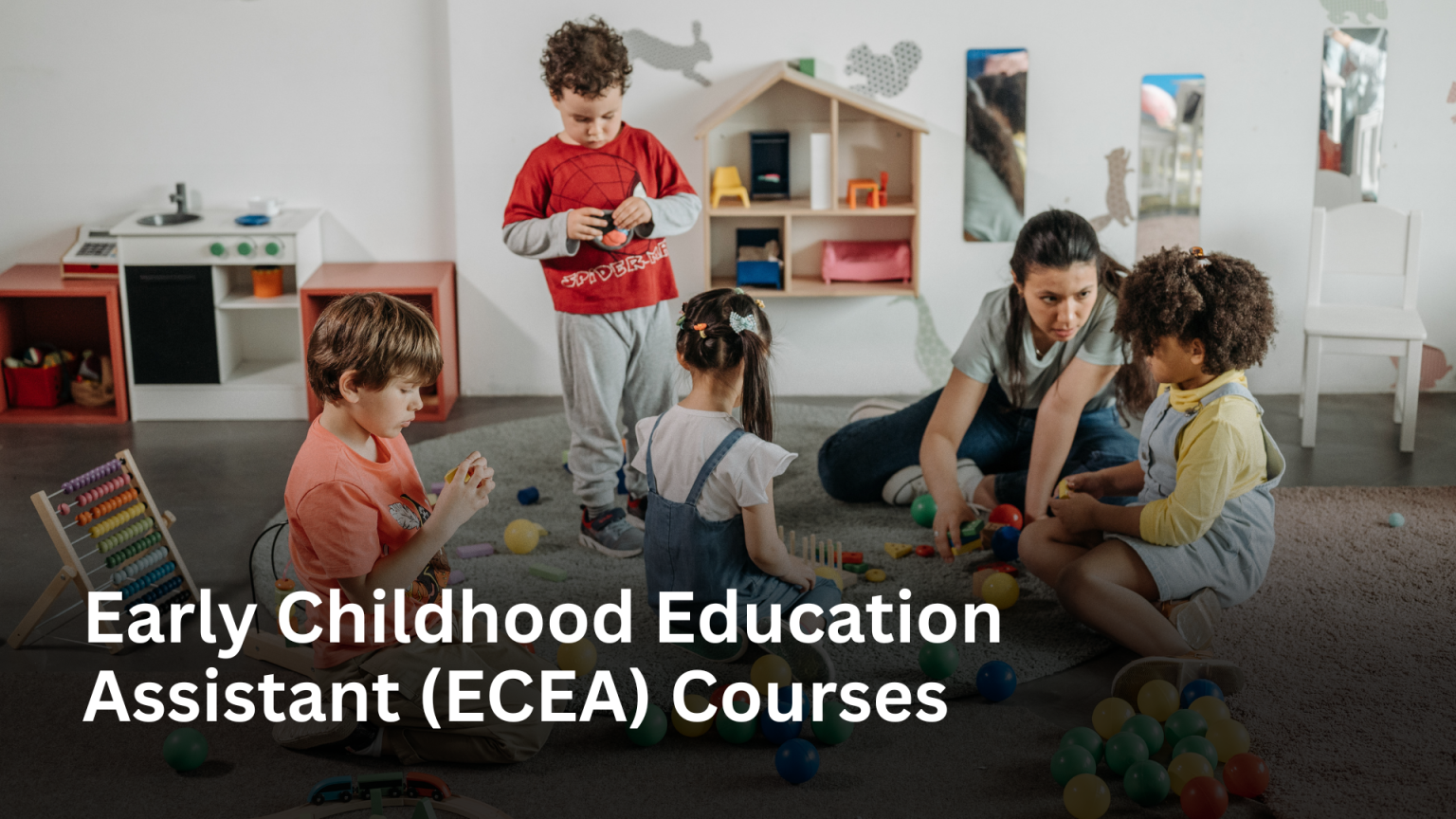
Cambridge ECEA Courses
Looking to launch a rewarding career working with children? At Cambridge College in Surrey, our Early Childhood Educator Assistant (ECEA) Certificate provides a clear pathway to becoming a certified ECEA in British Columbia.
This program blends key foundations of child development I, child development II, and Interpersonal Communication into one comprehensive certificate, offered in flexible formats with dedicated support every step of the way.
Tuition Fee - $2850
ECEA Course 001 - Child Growth & Development I
This course is an introduction to the growth and development of children from prenatal stages through early childhood (infancy to approximately 3 years). Students will explore how children develop physically, cognitively, emotionally, and socially during the infant and toddler years. Emphasis is placed on understanding developmental milestones in these early stages, the individual needs of each child at a given age, and factors that influence development such as genetics, family, and culture.
The course also introduces major child development theories (e.g. attachment theory, Piaget’s sensorimotor stage, Erikson’s infancy stages) and how they explain behaviour and learning in the early years. Students will begin practicing observational techniques to record infant/toddler behaviour in order to connect theoretical knowledge with real-world child interactions. By the end, students should appreciate how rapid development in the first three years lays the foundation for later childhood growth.
- High school diploma or equivalent, grade 12 English- minimum grade of C, mature student status (19 years or older).
- Criminal record check.
- Immunization report.
- Meet minimum English language proficiency requirements.
- Evidence that 3 years of full-time secondary education (Grades 8-12) have been successfully completed in the program’s language of instruction in a country where the language of instruction is one of the principal languages. Grade 12 English with minimum grade of C. This may include successful completion of a BC Adult Graduation program. OR
- Completion of 2 years of full-time post-secondary education at an accredited institution where English is the principal language of instruction OR
- Provide verified results for one of the English language proficiency tests listed below.
- International English Language Testing System (IELTS) Academic: overall score of 5.5 or higher.
- Canadian Academic English Language (CAEL) Test: overall score of 40 or higher
- Duolingo English Test: overall score of 95 or higher
- Test of English as a Foreign Language (TOEFL) IBT: overall score of 46 higher
- Canadian English Language Proficiency Index Program (CELPIP): Listening 6, Speaking 6, Reading 5, and Writing 5.
Test results must be dated no more than two years before the start date of the program.
Pearson Test of English (PTE) Academic: overall score of 43 or higher
Upon completion of this program the successful student will have reliably demonstrated the ability to:
- Identify physical, cognitive, language, and social-emotional milestones from prenatal to toddlerhood.
- Explain child development theories including Piaget, Erikson, and Bowlby.
- Recognize how genetics, family, culture, and environment influence development.
- Observe and record infant/toddler behaviour using objective techniques.
- Promote early health and safety practices (e.g., safe sleep, nutrition).
Upon completion of the program, graduates may find employment in roles such as:
- Early Childhood Assistant
- Preschool Assistant
- Infant/Toddler Care Aide
- Daycare Worker (Assistant)
- Child Care Centre Assistant
- Nursery Assistant
- Classroom Support Worker
| Method of Delivery (reflect all methods used) |
Contact Hours |
|---|---|
| Classroom (Instructor Led) | 45 hrs |
| Computer Based Training | 0 hrs |
| Distance Education | 0 hrs |
| TOTAL | 45 hrs |
| S. No. | Topics & Objectives | Hours | Assessment |
| 1 | Intro to Child Development + Prenatal Development & Birth | 5 hrs | Participation, Quiz |
| 2 | Infant Physical Development + Infant Cognitive Development | 5 hrs | Worksheet, Short Essay |
| 3 | Language Development + Attachment & Social Development | 5 hrs | Group Task, Midterm Quiz |
| 4 | Toddlerhood & Observation + Toddler Physical & Motor Development | 5 hrs | Assignment, Quiz |
| 5 | Toddler Cognitive Development + Emotional Regulation | 5 hrs | Reflection Notes, Participation |
| 6 | Erikson’s Early Stages (0–3 yrs) + Temperament & Behaviour Guidance | 5 hrs | Worksheet, Scenario Response |
| 7 | Inclusive Development + Cultural Awareness + Health, Nutrition & Safety | 5 hrs | Short Essay, Quiz |
| 8 | Integration, Case Studies & Review | 5 hrs | Final Project |
| 9 | Optional Make-up / Extra Support / Instructor-Led Reflection | 5 hrs | Instructor Discretion |
| Total Hours | 45 |
ECEA Course 001 - Child Growth & Development I
This course is an introduction to the growth and development of children from prenatal stages through early childhood (infancy to approximately 3 years). Students will explore how children develop physically, cognitively, emotionally, and socially during the infant and toddler years. Emphasis is placed on understanding developmental milestones in these early stages, the individual needs of each child at a given age, and factors that influence development such as genetics, family, and culture.
The course also introduces major child development theories (e.g. attachment theory, Piaget’s sensorimotor stage, Erikson’s infancy stages) and how they explain behaviour and learning in the early years. Students will begin practicing observational techniques to record infant/toddler behaviour in order to connect theoretical knowledge with real-world child interactions. By the end, students should appreciate how rapid development in the first three years lays the foundation for later childhood growth.
- High school diploma or equivalent, grade 12 English- minimum grade of C, mature student status (19 years or older).
- Criminal record check.
- Immunization report.
- Meet minimum English language proficiency requirements.
- Evidence that 3 years of full-time secondary education (Grades 8-12) have been successfully completed in the program’s language of instruction in a country where the language of instruction is one of the principal languages. Grade 12 English with minimum grade of C. This may include successful completion of a BC Adult Graduation program. OR
- Completion of 2 years of full-time post-secondary education at an accredited institution where English is the principal language of instruction OR
- Provide verified results for one of the English language proficiency tests listed below.
- International English Language Testing System (IELTS) Academic: overall score of 5.5 or higher.
- Canadian Academic English Language (CAEL) Test: overall score of 40 or higher
- Duolingo English Test: overall score of 95 or higher
- Test of English as a Foreign Language (TOEFL) IBT: overall score of 46 higher
- Canadian English Language Proficiency Index Program (CELPIP): Listening 6, Speaking 6, Reading 5, and Writing 5.
Test results must be dated no more than two years before the start date of the program.
Pearson Test of English (PTE) Academic: overall score of 43 or higher
Upon completion of this program the successful student will have reliably demonstrated the ability to:
- Identify physical, cognitive, language, and social-emotional milestones from prenatal to toddlerhood.
- Explain child development theories including Piaget, Erikson, and Bowlby.
- Recognize how genetics, family, culture, and environment influence development.
- Observe and record infant/toddler behaviour using objective techniques.
- Promote early health and safety practices (e.g., safe sleep, nutrition).
Upon completion of the program, graduates may find employment in roles such as:
- Early Childhood Assistant
- Preschool Assistant
- Infant/Toddler Care Aide
- Daycare Worker (Assistant)
- Child Care Centre Assistant
- Nursery Assistant
- Classroom Support Worker
| Method of Delivery (reflect all methods used) |
Contact Hours |
|---|---|
| Classroom (Instructor Led) | 45 hrs |
| Computer Based Training | 0 hrs |
| Distance Education | 0 hrs |
| TOTAL | 45 hrs |
| S. No. | Topics & Objectives | Hours | Assessment |
| 1 | Intro to Child Development + Prenatal Development & Birth | 5 hrs | Participation, Quiz |
| 2 | Infant Physical Development + Infant Cognitive Development | 5 hrs | Worksheet, Short Essay |
| 3 | Language Development + Attachment & Social Development | 5 hrs | Group Task, Midterm Quiz |
| 4 | Toddlerhood & Observation + Toddler Physical & Motor Development | 5 hrs | Assignment, Quiz |
| 5 | Toddler Cognitive Development + Emotional Regulation | 5 hrs | Reflection Notes, Participation |
| 6 | Erikson’s Early Stages (0–3 yrs) + Temperament & Behaviour Guidance | 5 hrs | Worksheet, Scenario Response |
| 7 | Inclusive Development + Cultural Awareness + Health, Nutrition & Safety | 5 hrs | Short Essay, Quiz |
| 8 | Integration, Case Studies & Review | 5 hrs | Final Project |
| 9 | Optional Make-up / Extra Support / Instructor-Led Reflection | 5 hrs | Instructor Discretion |
| Total Hours | 45 |